
An efficient solution in today’s competitive manufacturing business is to have efficient material handling. These are the different types of conveyors; the flat belt conveyor is one of the most widely used conveyors because of its simplicity, versatility, and reliability. As an assembly line, packaging business, food processing or warehouse manager, the conveyor system that you use can have a huge effect on your workflow.
You might believe that to choose the top conveyor system for your manufacturing unit, you need adequate plumbing expertise.You may think it’s essential to have enough plumbing experience to select the best conveyor system for your manufacturing unit.
Flat Belt Conveyors Knowledge.
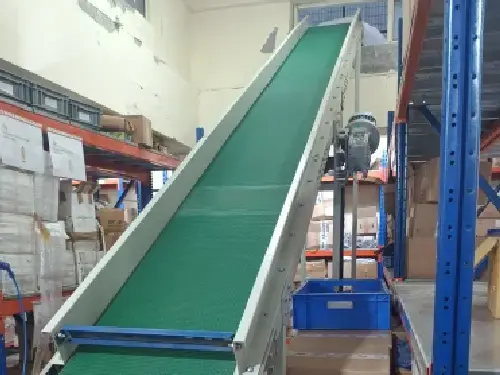
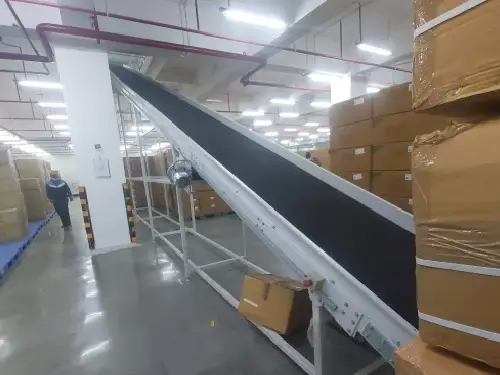
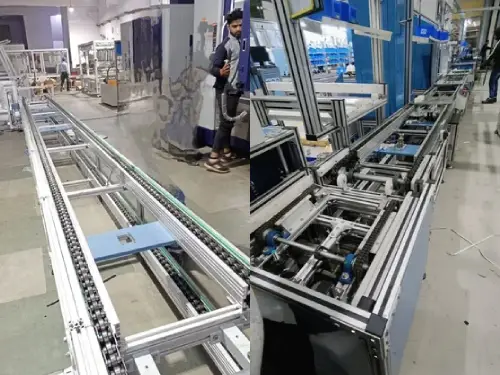
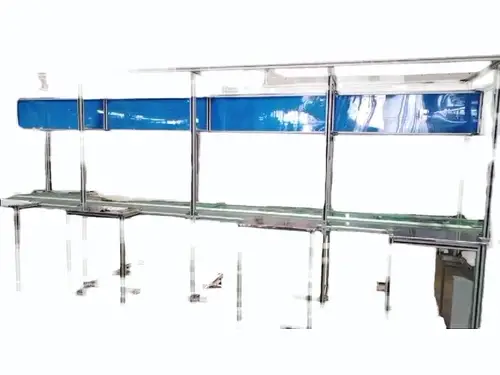
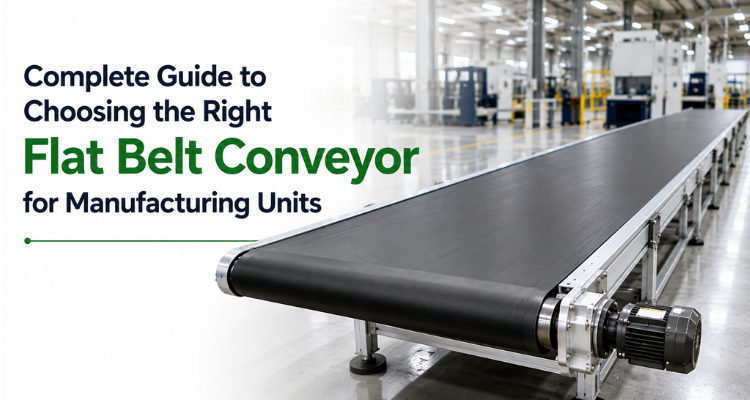
A flat belt conveyor is a material-moving facility where a flat, flexible, endless belt is used to move products or materials from one point to another via pulleys. These conveyors are engineered for seamless and uniform transportation, and they can be used to convey a variety of products in a wide variety of industries.
They are frequently employed to transport lightweight to medium-weight products, and are known for their quietness, minimal maintenance, and compatibility with various production settings.
Evaluate Your Material Handling Needs
Determine operational requirements before choosing a conveyor. Take into account the nature, weight, size and shape of products being moved. Knowing these factors enables you to decide on the type of conveyor belt, the belt width and capacity of the conveyor belt, and also the speed of the conveyor belt.
Depending on the application, different belt material types and surfaces can be needed; for example, more delicate products will necessitate a softer belt surface, while heavier products will require stronger belt materials and sturdier support structures.
Calculate the Conveyor length and layout
Manufacture facilities come in various sizes and the way they work. The conveyor should be ideal in dimensions to fit in available space and ensure efficient material handling.
While designing your conveyor layout, you should think about:
- Total conveyor length
- Elevation changes
- The number of transfer points present.
- Available floor space
- Future expansion requirements
A good layout minimizes stationery and facilitates material flow throughout the production process.
Choose the Right Belt Material
The belt material is a very important factor to the performance and durability of the conveyor. Depending on the application, different belt types and properties are desired.
The following materials may be used for making belts:
- PVC belts for textile processing, packing plants, paper factories, in general, as belts for general industrial use
- Heavy-duty operations: rubbers for belts.
- Belt for a food processing plant in the food industry.
- Polyurethane belts suitable for clean and hygienic environments.
A selection of the proper belt material provides longer service life and reliable operation.
Consider Load Capacity
One of the most crucial things to consider in choosing a conveyor system is its load capacity. Overloading can cause excessive wear, maintenance problems and failure.
Evaluate both the maximum load and average operating load. Conveyor Selection: Selection of a conveyor with proper capacity helps to ensure better performance and minimises downtime.
Evaluate Speed Requirements
The conveyors should be set at the speed that corresponds with the production objectives. A conveyor that is moving too slow can decrease productivity and if it runs too fast, it can lead to end product damage or safety issues.
The optimum speed of the conveyor will vary depending on:
- Product type
- Production volume
- Packaging requirements
- Assembly line processes
Careful speed selection will help to provide nonturbulent operation and efficiency.
Check out all the Customization Options if available.
Each manufacturing unit is specific towards its operation requirement. A reputable belt conveyor factory will be able to offer you solutions tailored to your needs for producing.
They may offer you the choice of customizations such as:
- Adjustable heights
- Side guides
- Variable speed controls
- Incline or decline parts
- Automated integration capabilities
Specialized systems can provide an improved performance and maximize working space.
Comparing different conveyor technologies.
Flat belt systems are very versatile, but for certain applications, an alternate conveyor may be necessary. For instance, a modular belt conveyor can be a suitable choice for operations requiring enhanced durability, easy cleaning, and the ability to handle complex product movements.
By comparing the options in the different conveyor technologies, the selected one would be suitable for the existing and future production needs.
Maintenance and Reliability are his areas of specialty.
The conveyor system is a relatively high investment. Using durable equipment and components along with equipment that allows easy access for maintenance, can minimize operational interruptions.
Read about these features:
- High-quality bearings
- Durable drive systems
- Easy belt replacement
- Simple cleaning procedures
- Partspare parts that are widely available
Having dependable equipment ensures a lower equipment downtime and better overall production efficiency.
Conclusion
When deciding on the best conveyor system for your manufacturing needs, it’s important to take a close look at your existing manufacturing production methods, material handling requirements, facility design, and expectations for future growth. These points take into account all of the above, helping manufacturers to opt for the belt that ensures the most efficient and productive operations.
Gaining insight into making the right investment in the conveyor system these days could mean smoother operations, lower costs, and success over the long run in your manufacturing unit.