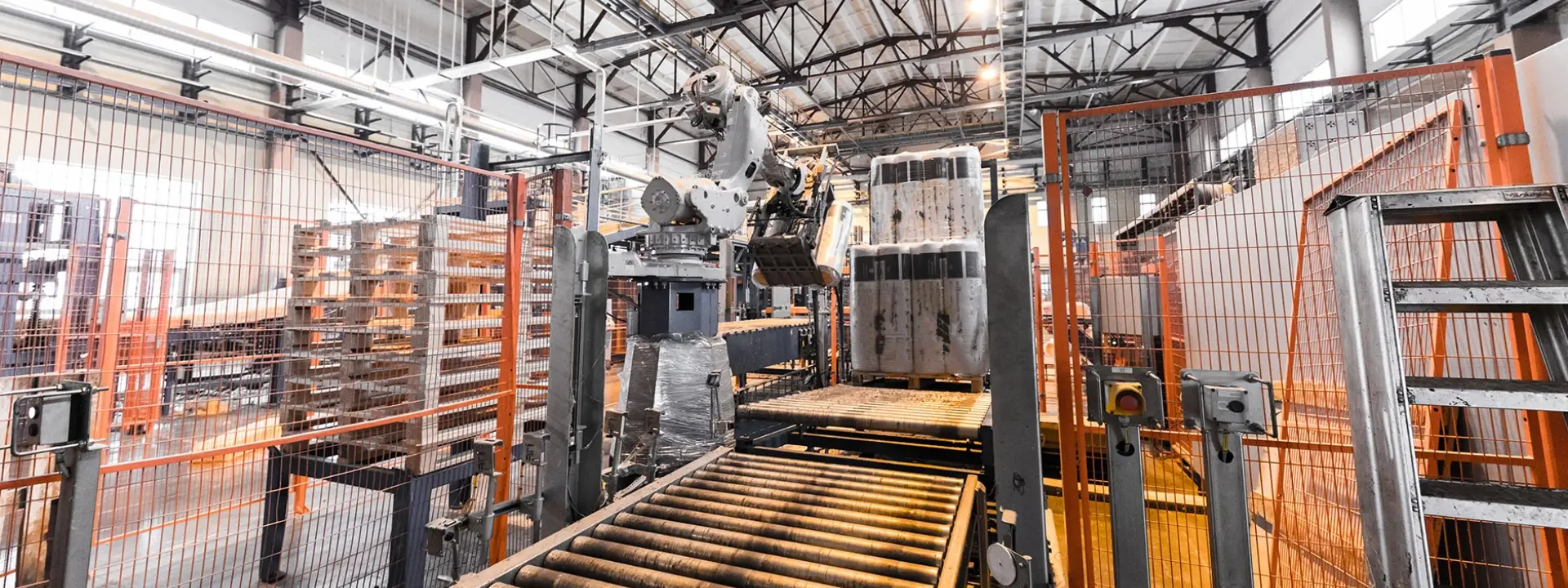
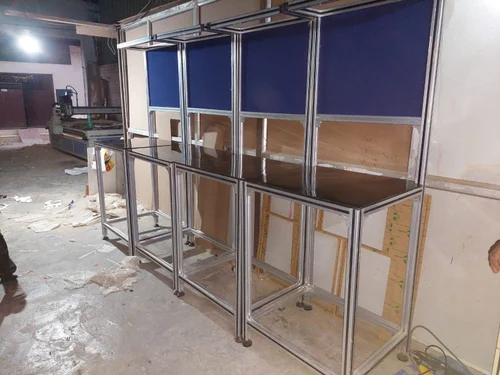
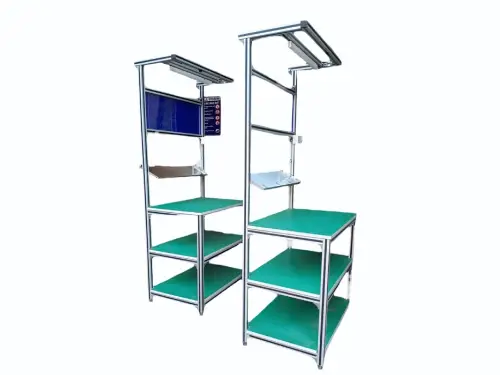
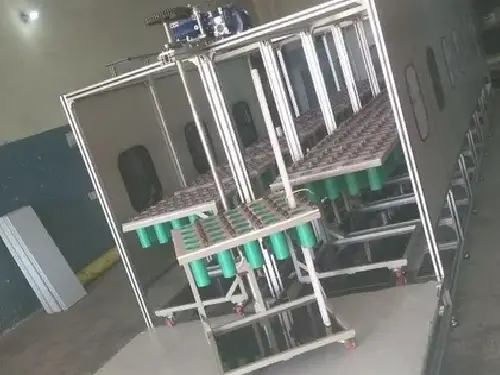
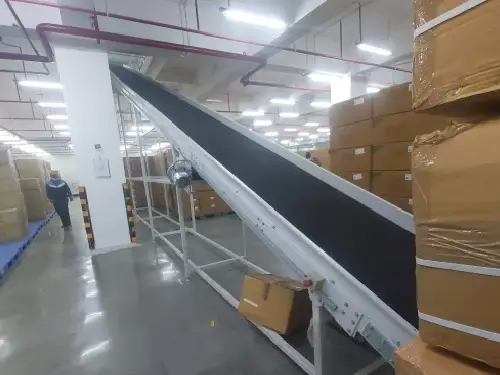
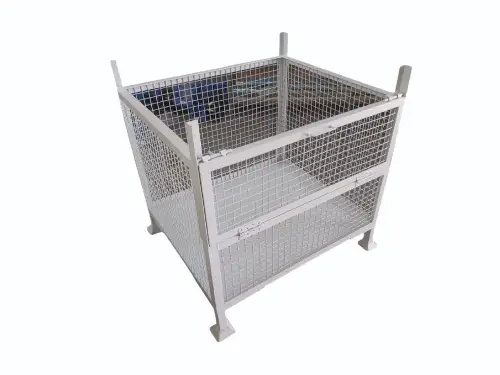
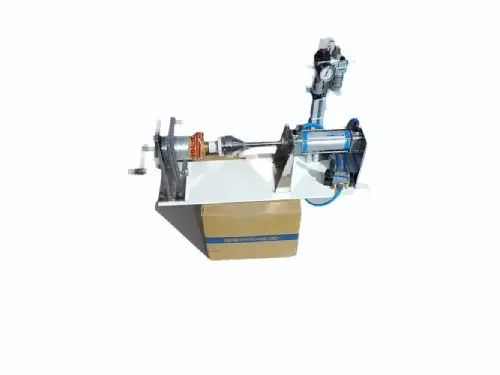

Today, the manufacturing industry is embracing automation, precision, and increased production volumes at a quick pace. As manufacturers are adopting CNC machines, robotics and automated production lines, the requirement for reliable products that can guarantee precision and uniformity throughout the manufacturing process has become more obvious. One particularly important solution is the use of advanced fixtures for Machining.
During any machining process like Drilling, Milling, Cutting, Grinding, Turning etc. work piece should be placed in a secure position. For this purpose it is necessary to use a suitable fixture. Advanced fixtures are engineered to optimize the efficient control of the automated equipment, assist manufacturers in minimizing manual contribution to the process and enhance productivity, accuracy and product quality.
What is a Machining Fixture?
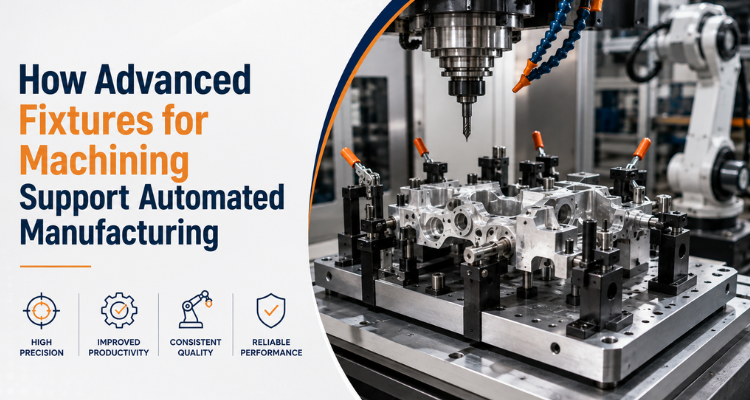
Machining fixtures are specially-designed devices that are made to secure a workpiece and keep it fixed in a machining operation. They make sure that the component is stable and properly oriented while working the machine.
Adjustments may be necessary to traditional fixtures and components. But, for an advanced fixture, some features like quick clamping mechanisms, sensors, modular components, automated positioning, and robotic compatibility can be added. The features make them very appropriate for present automatic manufacturing surroundings.
How Advanced Fixtures are Enabling Automation.
With automation, all steps in the manufacturing process have to run smoothly and without significant disruption. Advanced machining fixtures play a role in this goal in a number of ways.
1. Improve Workpiece Positioning
Positioning is crucial to automated machining. Dimensional errors or poor workpiece surface quality can occur even with the smallest movement of the workpiece.
Special “fine” fixtures offer accurate locating and clamping details to maintain parts exactly aligned and anchored. This enables the CNC machines and robotic systems to carry out machining operation in the same manner consistently to minimize the differences between the components.
2. Reduce Manual Intervention
Clamping and loading of the workpiece or product by a human operator can cause delays in production. It also has the potential of causing inconsistencies due to operators’ different positioning of components as they perform the procedures.
High-end fixtures can incorporate an automatic loading/unloading system. Workpieces can be transferred by robots to predetermined fixture positions, whereafter an automatic clamping system could secure them. This decreases the number of operators needed to work and assists in creating a smoother production process.
3. Faster Production Cycles
Manufacturers have been on a search and search again to boost production without compromising any quality criteria. Good fixtures will help to minimise set-up and changeover time.
Workpieces can be secured quickly with quick-release mechanisms, hydraulic/clamping or pneumatic clamping, modular designs and standardized locating systems. Consequently, machines have increased productivity time, and thus are spending less time waiting for manual set-up.
4. Enhance Machining Accuracy
Use of automation is only really good if you get consistent results. Highly programmed fixtures ensure the correct location of the part during the whole working cycle.
Heavy clamping creates a good rigid connection which reduces any unwanted movement and vibration. This helps to maintain strict tolerances and uniformity in dimensions, especially for automotive, aerospace, engineering, and other precision manufacturing applications.
5. Enable Robotic Integration
Increased use of robots – material handling, loading of machines, inspection and others in manufacturing. Components need to be plugged into a known and consistent location for robots to function efficiently.
Advanced fixtures supply standardized locations for robotic handling ease. It is possible to load the components a number of times by a robot and have the machining equipment repeat the programmed operations in precisely the same manner.
Some advanced features make fixtures automation-friendly:
Modern fixture may incorporate one or more aspects which are unique to automated manufacturing. These are some of the characteristic features:
- Pneumatic and hydraulic clamping: These systems enable fast and controlled workpiece clamping.
- Modular construction: elements can be exchanged for various workpieces.
- Sensors: Sensors can check to ensure that a part is properly installed and properly clamped.
- Quick change mechanisms: These are beneficial to minimize downtime during change of product.
- Convenience of robotic loading/unloading: Fixtures can be designed around the robotic loading / unloading system.
- Precision locating systems: These provide repeatable positioning of the workpiece in production.
All these features contribute to manufacturers to develop more efficient and reliable automatic machining processes.
There are moderate opportunities for enjoying benefits for Modern Manufacturing.
In general, advanced fixtures can offer a number of advantages to manufacturers over the long run. The better the repeatability the better the product quality in large volume production. Spend less time setting up and clamping-up machine stands while improving efficiency in workplaces by reducing manual handling.
In addition, a standardized positioning provides more reliability of machining and less waste of materials and rework. Correctly designed for a particular application, they can also allow easier access or optimization of the total machining cycle.
Advanced fixtures play a significant part in the smart manufacturing and Industry 4.0 initiatives due to these benefits.
Choosing the Right Fixture for Automated Production
Fixture design plays a crucial role in determining its effectiveness. Before choosing a solution, businesses should consider factors such as the size and material of the parts, machining operations, required tolerances, production volume, machine type, and level of automation.
Companies should also consider future production requirements. If product designs or manufacturing processes may change, a modular or flexible fixture can provide greater adaptability and support evolving production needs.
By partnering with a reputable fixture supplier, businesses can obtain solutions that match their machining processes, existing fixtures, automation requirements, and equipment. A well-designed fixture not only improves production efficiency but also helps optimize the overall manufacturing process.
Conclusion
With automation transforming manufacturing, the production is getting faster, consistent and data driven more than ever before. But, manual machines and robotics require secure work- holding solutions to work effectively.
Advanced Fixtures for Machining offer the stable, precise, repeatable and automation-compatible foundations needed for today’s production environments. These fixtures provide greater repeatability and consistency, offer reduced set-up time, enhanced positioning and assist with robotic systems, leading to increased productivity for manufacturers.
In the age of increased automation, a proper investment in well-designed machining fixtures can be a crucial component of designing efficient, flexible and reliable production systems.