
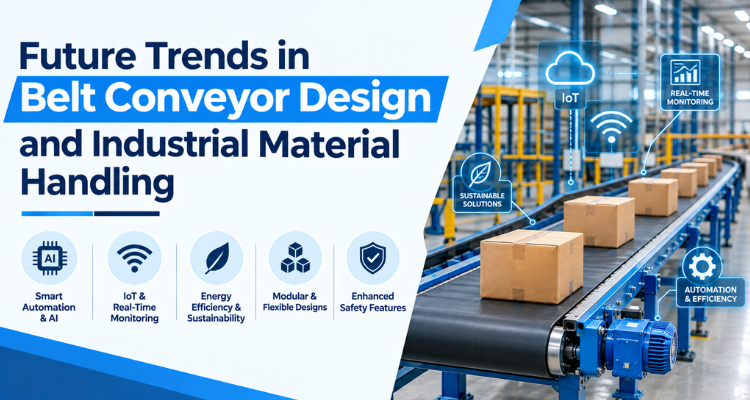
We are in the middle of a transformation of industrial material handling that is faster than ever, as businesses seek the fastest, safest and most efficient movement of products and materials. Belt conveyors are still significant equipment within manufacturing and warehousing, logistics, food processing, and other areas and industries. But today’s needs are prompting manufacturers to create more intelligent and adaptable conveyor options.
The future of conveyor systems is beyond doubt being determined by the availability of automation and digital technology; energy efficiency, intelligent monitoring, flexible designs, and enhanced safety features remain key priorities. These developments will aid businesses with high productivity, while minimizing operational and maintenance costs.
1. Smarter Conveyor Systems
Implementing smart technology is one of the biggest trends in conveyor design solutions. Various sensors and monitoring equipment can gather data regarding equipment condition, belt speed, load, temperature, and vibration.
Such information is useful to the operator to detect abnormal conditions early rather than late. Real-time monitoring allows businesses to plan maintenance activities at the appropriate time and minimize unexpected downtime.
2. More adoption of modular conveyor designs
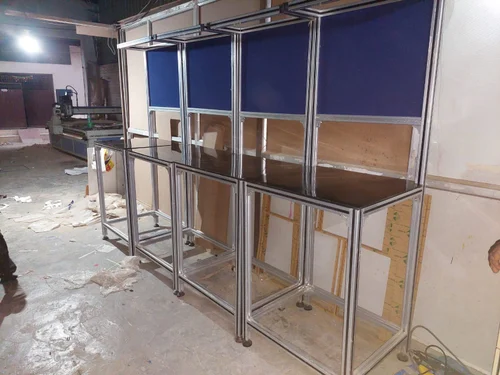
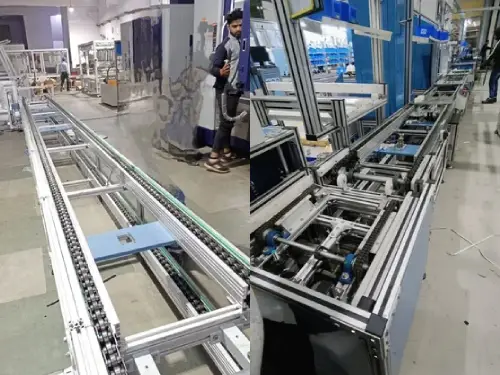
The flexibility is growing to be important for modern production facilities. Modular belt conveyors can offer companies greater flexibility, as parts can be tailored to specific needs.
Modular designs may be extended according to various conditions such as length and width of the conveyor, the configuration of application and various others. They’re also easier to maintain as a whole, as some parts can be replaced without the need for a reconstruction.
With production requirements evolving, businesses are finding modular conveyor technology can assist them in streamlining and refining their material handling processes without having to make significant changes to the overall facility.
3. Energy-Efficient Conveyor Technology
Knowing how much energy is being used is a key factor for an industrial business. Continuous conveyor systems can use a lot of electricity—so they need to be designed to be efficient.
The motors, optimized drive systems, and intelligent controls found in future conveyer systems will probably be more efficient. Variable speed conveyors can be used to deliver the proper rate of travel rather than the equipment running at full speed.
4. Robotics Control Devices & Advanced Flat Belt Conveyor Solutions
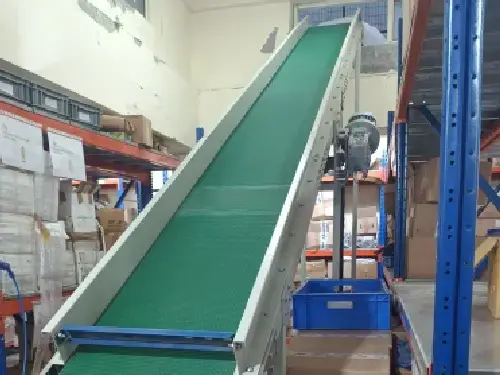
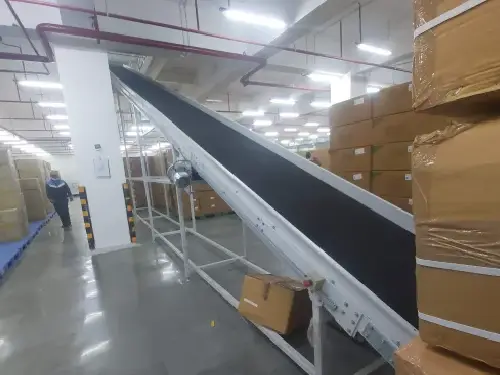
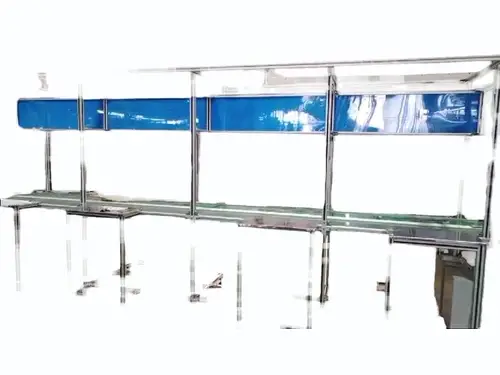
The flat belt conveyor remains in extensive use, within a variety of applications such as transport of packaged products, parts, boxes or other objects. Expect further developments in belt material, improved drive mechanisms, and enhanced safety features.
Conveyor manufacturers are also working on creating conveyors that will be easier to clean and maintain, and allow them to be connected to automated equipment. It is especially beneficial in environments that demand hygiene, precision, and uninterrupted manufacturing in industries such as healthcare and manufacturing.
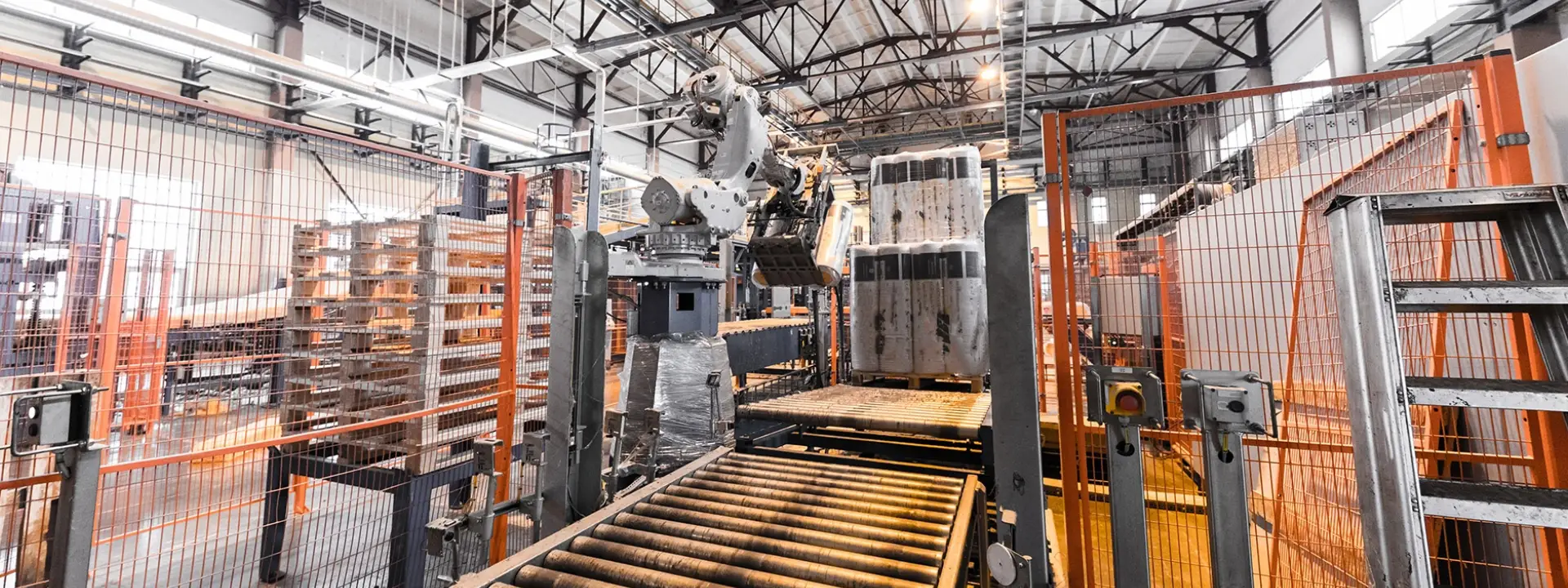
5. The introduction or integration of automation and robotics
In the future, automation will be a key component in everyday industrial material handling. Conveyors can operate in conjunction with other technologies such as robotic arms, automated storage devices, scanners, sorting devices, etc.
A modern belt conveyor factory can, therefore, not only manufacture conveyor equipment but also strictly consider systems which can smoothly integrate and develop into comprehensive and large automation solutions.
6. Predictive Maintenance
Fixed maintenance schedules are still the basis for traditional maintenance. But by collecting equipment data, predictive maintenance can detect impending equipment failures before they actually happen.
For future conveyor systems, sensors and monitoring software will track components of the system like belts, bearings, rollers and motors. This information can be utilized by the maintenance team to recognize wear and take corrective steps that would prevent equipment failure and result in expensive downtime during production.
7. Improved Safety Features
Future conveyor design will continue to be based on safety. These features can help minimize workplace risks and are part of an emergency stop system, belt alignment sensors, protective guards, overload detection and automatic shutdown features.
Modern systems can also provide operators with alerts when unusual operating conditions are detected. When safety technology and automation are combined, they can result in safer, controlled material handling environments.
Conclusion
The future of industrial material handling will depend on automation, smart monitoring, energy efficiency, flexible designs, and advanced safety features. Technologies such as the modular belt conveyor and flat belt conveyor will continue to evolve as industries adopt new processes and efficiency standards.
Therefore, businesses looking to improve their material handling operations should invest in a belt conveyor factory with strong expertise in modern automation and system integration. Advanced conveyor technologies and flexible designs will help industries improve material handling efficiency, reduce downtime, and increase productivity in the years ahead.