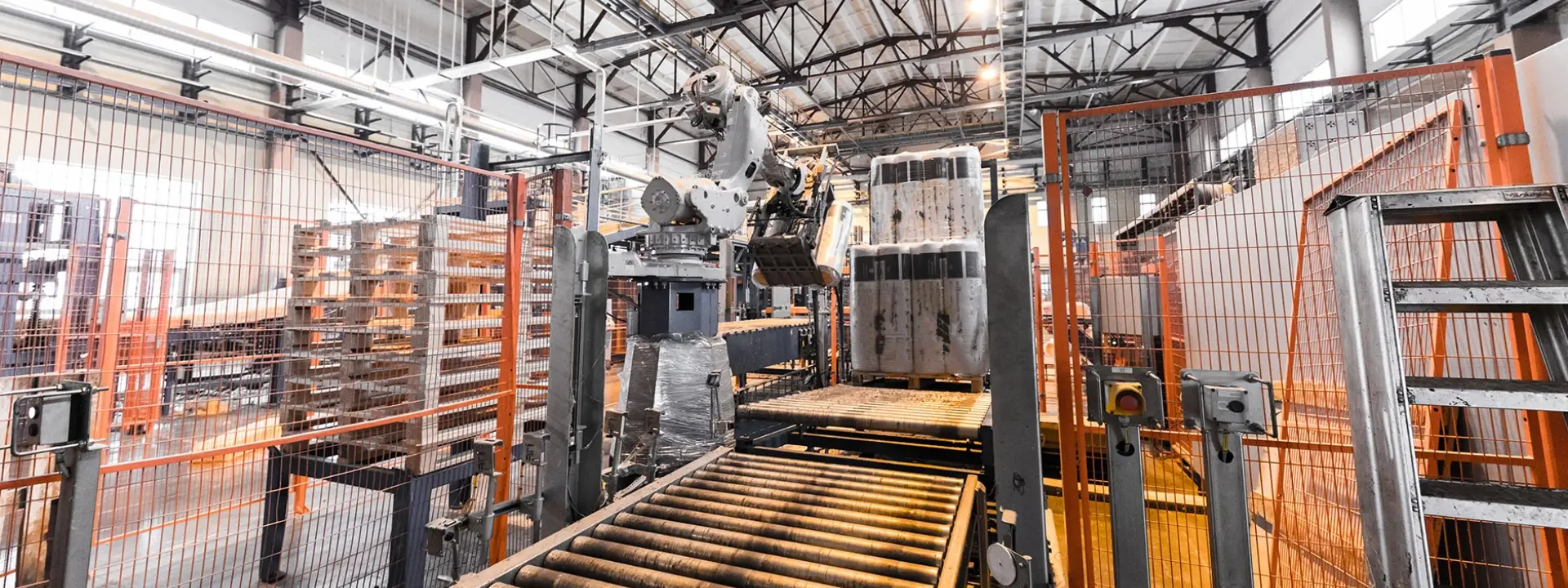
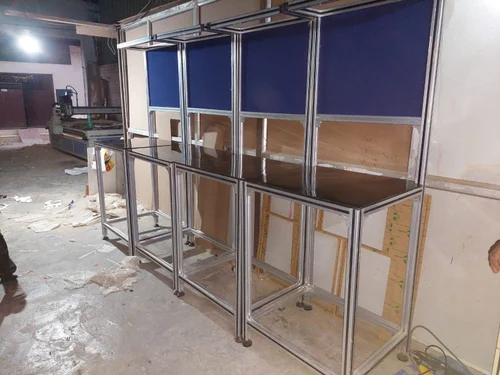
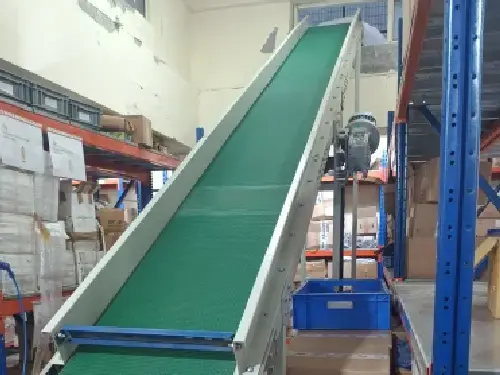
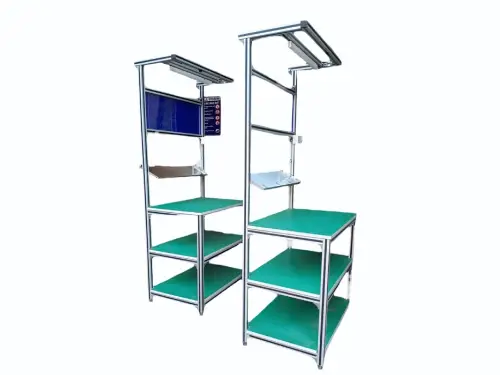
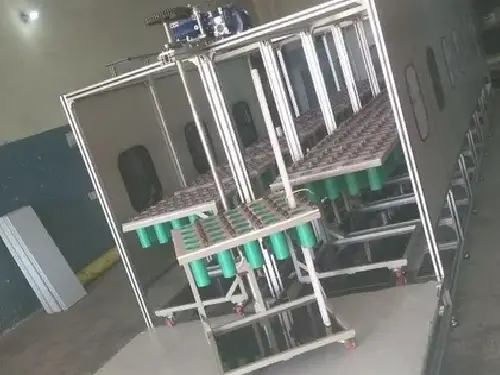
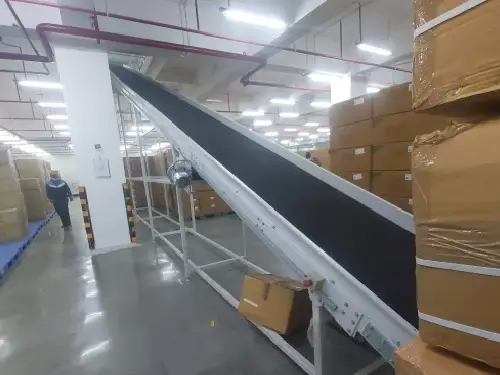
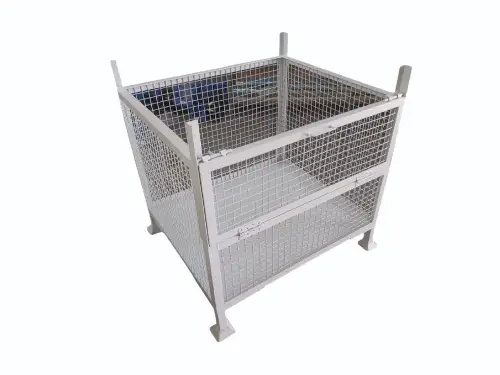
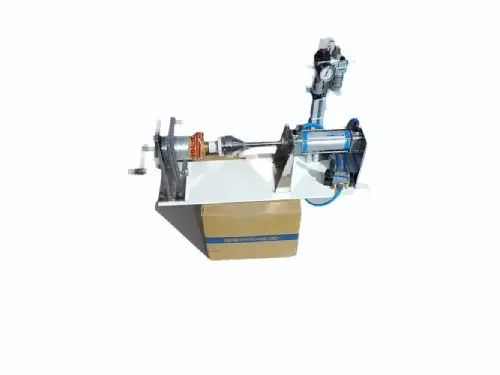
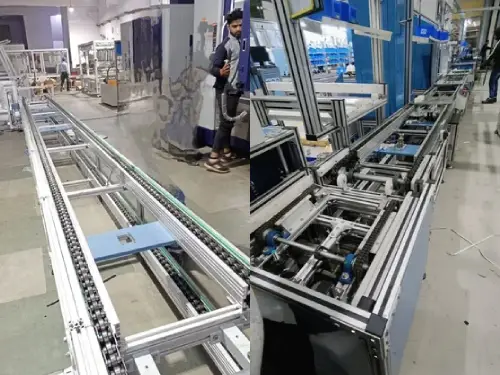
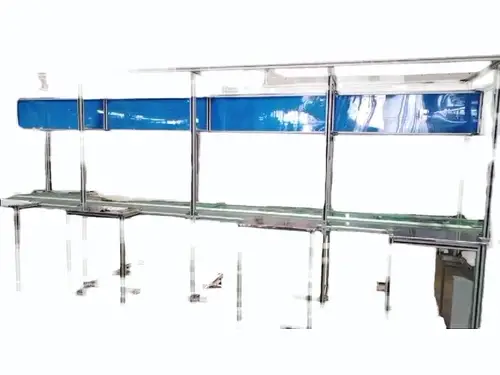
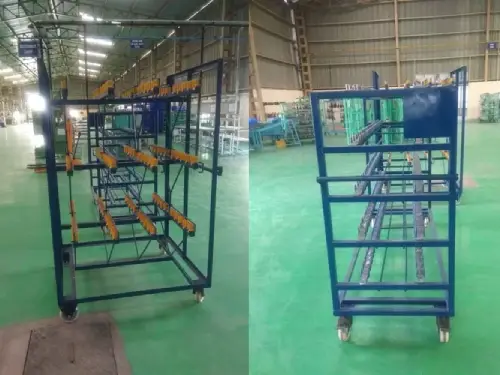
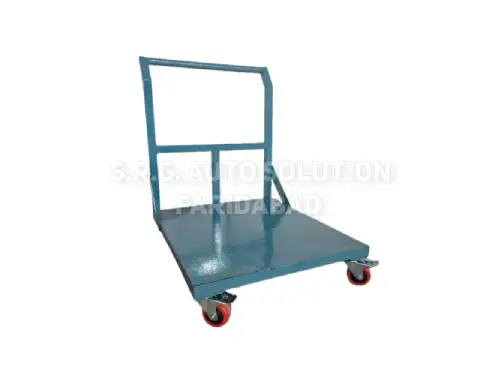

All of the three Ks – smoothness, reliability and continuity – form the core of an assembly line. Whether you need to transport small parts between stations on an assembly line in a vehicle or factory, efficient conveyor systems are essential for businesses.Businesses require efficient conveyor systems, regardless of the type of business they operate – from automotive and engineering units to small packaging and manufacturing plants. One of the most reliable options for such applications is the Chain Conveyor which can carry heavy load, move continuously and give a controlled movement.
If a business wants to increase production efficiency, engaging proficient chain conveyor manufacturers could assist them in picking a system that suits their production requirement. There are various configurations of chain conveyors and they can be configured to the product size, weight, speed and assembly-line layout.
What is Chain Conveyor?
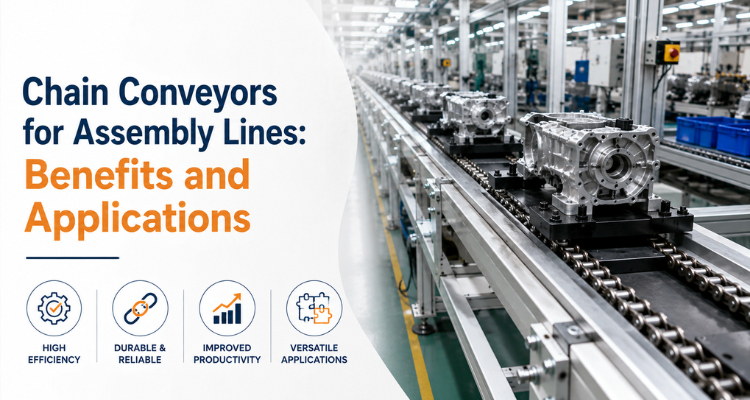
A chain conveyor, which is a type of mechanical and material conveying equipment, is used to carry products, components, pallets or any other materials along a predetermined low path with the help of one or more conveyors. The chain is driven by a motor through the use of sprockets and thus provides continuous movement.
Chain conveyors are designed to operate under harsh Industry conditions and are not like some light weight conveyor machine. They have an excellent construction which enables them to carry heavier components and products which could not be easily conveyed using traditional belt conveyors.
Depending on the application, the conveyor is may be designed with various different types of chain, supporting structure, rollers, sprockets and drive systems.
So why are chain conveyors ideal for use on an assembly line?
Central material movement is necessary in assembly lines, for reliable and accurate flow of materials. Production slowdowns at any of the workstations could impact the whole production process. Chain conveyors can be used to ensure a consistent flow of products and components between various production phases.
Let’s discuss some of the key advantages of chain conveyors in production lines.
1. Efficient Material Movement
In place of free-flow conveyors, a chain conveyor ensures continuous transportation of the workpieces from one workstation to another, thus eliminating manual handling. This can enhance productivity and cut down interruptions throughout the manufacturing procedure.
Conveyor speed adjustment systems can also be used to adjust the speed of the products as they are assembled. It simplifies facilitation of the movement of materials with workers, machines and automated systems.
2. Use when carrying heavy loads.
The one greatest benefit of chain conveyor is that it is able to move heavy materials. When a conveyor is designed in the proper way, it can move products safely without the need for any safety equipment. Automotive parts made of various materials, metal parts, pallets, parts for machinery and other industrial products can be shipped safely.
The powerful, tough chain feature ensures the reliability and strength required for heavy-duty applications, which a lighter conveyor chain may not be able to handle.
3. Better Production Flow
A good Conveyor system would provide a predetermined path where material could be conveyed. Each part could revolve from an arranged sequence of assembly as well as through several stages.
This keeps members of the work team from needless motion and allows them to have the parts they need brought to their workstations. This in turn will allow companies to optimize the production process and utilize the available production area more effectively.
4. Flexible Design Options
There are various space and production needs of each assembly line. Chain conveyors come in a range of different lengths and types, depending on the space constraints.
They are able to be connected to workstations, inspection points, transfer units, lifting systems, sensors and automated systems. These are advantageous in a simple production line and also for a more automated line.
5. Reliable Operation
Many industries have industrial assembly lines which can run for long periods. As such, conveyor regularly used equipment should be capable of enduring the continuous usage and not interrupt use too regularly.
Chain conveyors can be dependable if the manufacturers make use of proper quality chain, sprockets, appropriate bearings, rollers and drives. These can be further ensured for long life through regular inspection and maintenance.
Here are some of the various applications of Chain Conveyors in Assembly Lines.
Its strength and versatility in applications make chain conveyors suitable for use in various industries. They have a variety of common applications, such as:
Automotive Assembly
The automotive manufacturing industry is transporting heavy parts like engines, vehicles chassis components, metal assembly and other parts of the car. These materials may be transported between various production-stations by chain conveyors.
Engineering and Metal Industries volunteering.
These units for the most part have heavy and rigid parts to be engineered. Chain conveyors are ideal for conveying manufactured parts, parts for machinery or metal goods in manufacturing and assembly processes on a stable surface.
Improving packaging, as well as access to pallets.
Loaded packed pallets, containers, boxes and other products can be moved with the chain conveyor. Their robust design ensures that the products can be safely and reliably transported to the application.
Items moving from Station to Station.
It is possible that there are several workstations in an assembly operation. These stations can be linked by chain conveyors to eliminate the need of workers to move the components from one station to another station in the production process.
Automated Manufacturing
Today, more and more factories incorporate sensors, robotics, PLC systems (also known as process controllers), and other automation equipment with conveyors. These integrated production systems can be a component of chain conveyors.
It is important to select the right type of chain conveyor.
There are a number of factors that need to be considered when choosing the appropriate conveyor. The weight and size of materials, conveyor speed needed, quantity to be produced in the facility, available floor space, operating environment, and degree of automation businesses want to have should all be taken into consideration.
Picking the right components is additionally essential. Incorporating experience conveyor chain suppliers can assist companies in obtaining ideal link and components directly straight into the application.
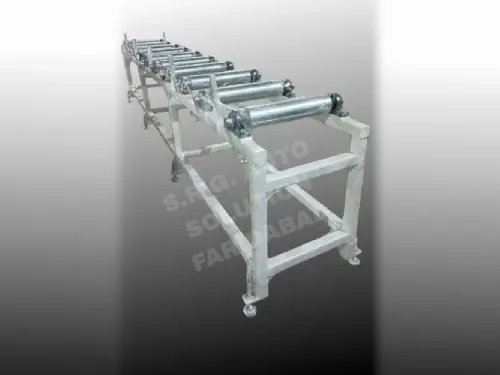
Rollers also have significance for systems to move smoothly and controllably. Selecting a reliable conveyor roller manufacturer can contribute to the successful, reliable and efficient running of a conveyor system.
Creating longevity and achieving optimal performance.
It’s critical for a chain conveyor to have regular maintenance if you want it to operate efficiently. Run chains and sprockets, rollers, bearings and drive components periodically as appropriate.
Proper lubrication can minimize friction and wear, and examination of the tension on the chain can also prevent and decrease undue tension on the system. If any unusual noise, vibration or movement occurs then it should be investigated immediately.
Unexpected downtime can be minimized, and the life of conveyor components can be extended, with preventive maintenance.
Conclusion
Chain Conveyors offer practical and reliable solution to convey material for any assembly lines. They are valuable for use in various industries such as the automotive, engineering, packaging and manufacturing sectors due to their end-to-end capabilities of moving heavy loads, steady motion and seamless handshaking with automated systems.
If you choose the appropriate design, components and maintenance procedures, businesses can enhance the flow of materials, minimise man-in-the-middle operations and boost your production environment. Selecting experience manufacturers and selecting quality components is an essential and pivotal part of the investment to ensure reliable long term performance for companies planning a new assembly-line conveyor, such as the ones from Froebel Industries offered by the company, or upgrading an existing system.
About SRG Autosolution
SRG Autosolution offers industrial material-handling solutions and conveyor solutions for various manufacturing and production needs. The company’s emphasis is placing essential and effective conveyors and components in the field to ensure the efficient and reliable functioning of industrial processes.