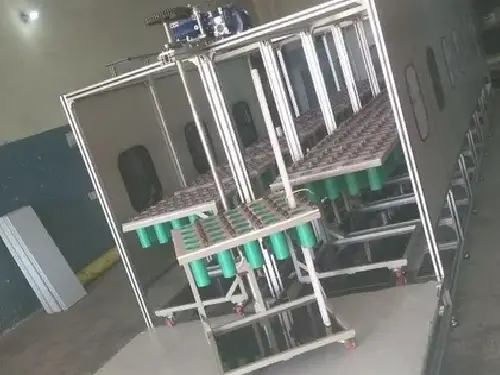
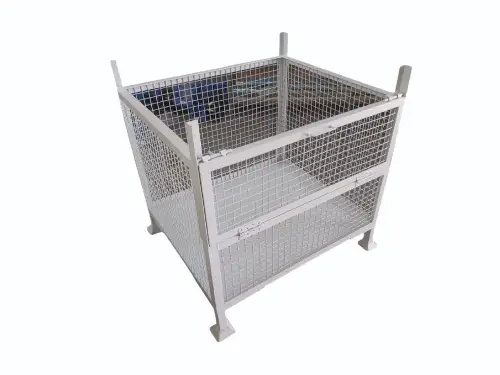
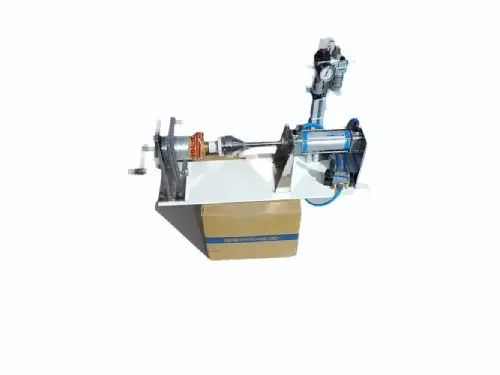
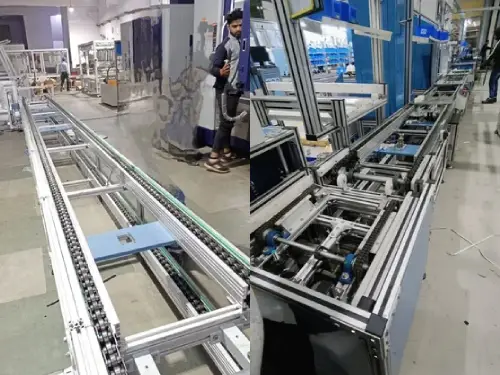
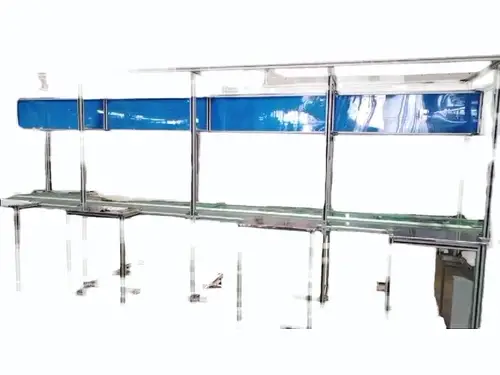
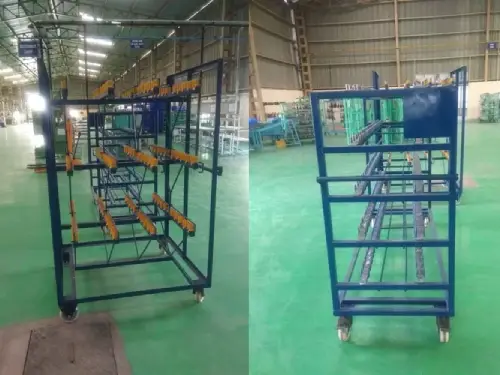

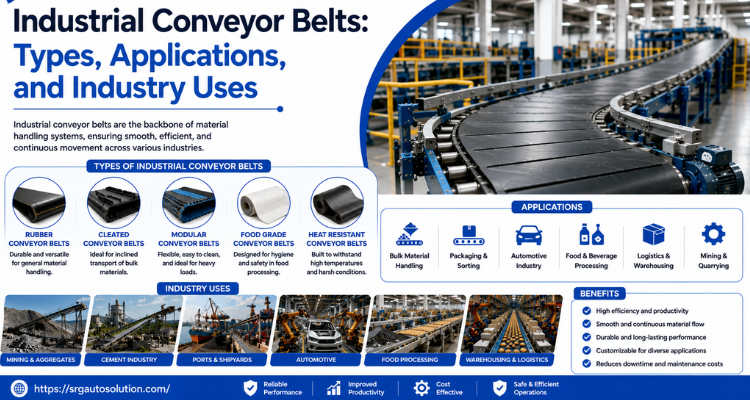
Conveyor belts are an indispensable tool in today’s factories and industrial premises. They are used to transport products, raw materials and components between businesses in an effective and efficient manner, whilst also cutting down on manual efforts and increasing productivity. Whether in factories, warehouses, construction sites or distribution hubs, conveyor belts are a vital component in optimizing workflows and operations.
By learning about the various types and their uses, businesses can select the most appropriate conveyor belt for their needs.
Industrial Conveyor Belts help move industrial goods along conveyors.
In industry, conveyor belts are a continuous moving system that moves material from one place to another. They’re implemented in multiple industries that demand rapid, secure, and effective transportation of goods. Conveyor belts can handle a variety of materials, including boxes, pallets, metal components, packaged goods, and bulk materials.
A good industrial conveyor belt manufacturer can tailor conveyor belt designs to various industries, ensuring they are durable, efficient, and suited to their operational requirements.
Examples of dryer ones are flat belts, fabric conveyor belts, and rubber conveyor belts.
1. Flat Belt Conveyors
One of the most commonly used conveyor systems is a flat belt conveyor. They are a continuous flat belt around pulleys and work to move lightweight to medium weight products.
Applications:
- Packaging units
- Warehouses
- Assembly lines
- Logistics centers
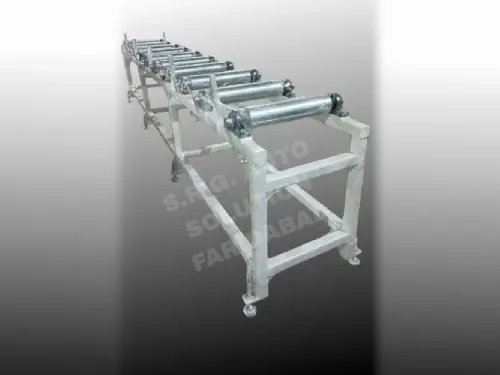
2. Roller Belt Conveyors
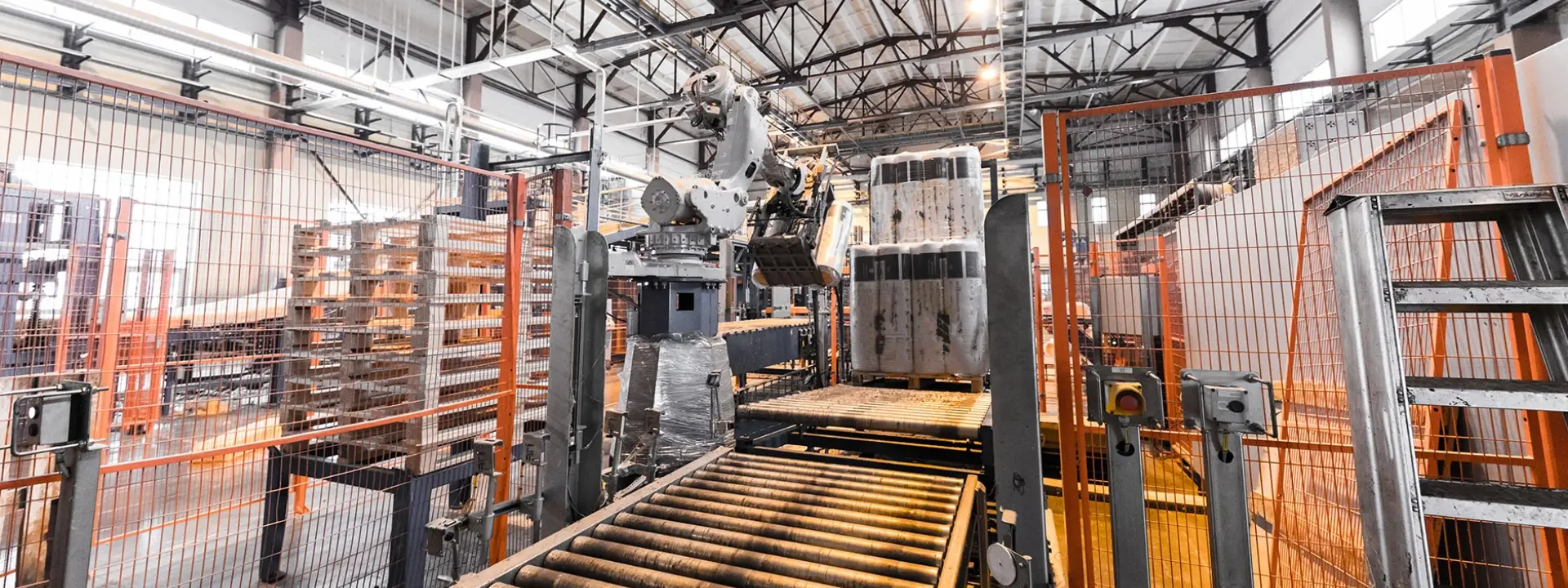
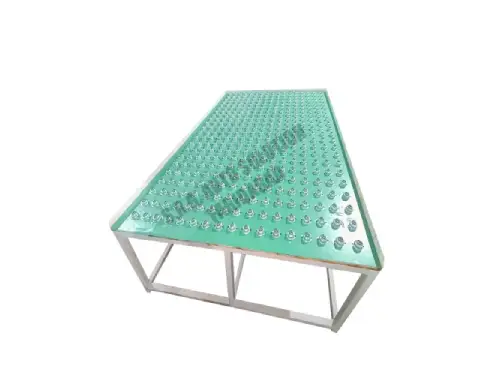
Roller belt conveyor is to support and transport the product using the roller. They can be used to move heavier objects and are also commonly found in various industrial applications.
Applications:
- Distribution centers
- Manufacturing plants
- Shipping facilities
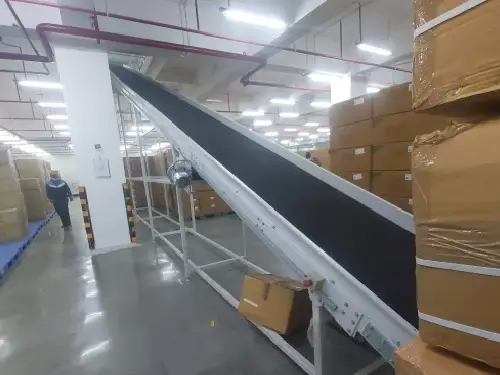
3. Inclined Belt Conveyors
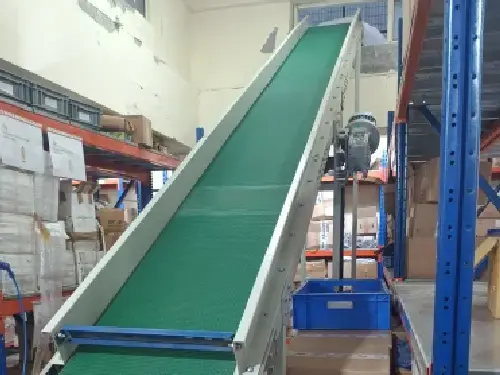
Inclined conveyors are containers which move materials from one elevation to another. The markets that supply them are useful whenever a product should be moved up or down when it’s being processed.
Applications:
- Food processing
- Packaging industries
- Warehousing operation
4. Modular Belt Conveyors
These are made with interlocking also plastic modules rather than using a continuous belt. They are versatile and convenient to maintain.
Applications:
- The food and beverage sectors.
- Pharmaceutical manufacturing
- Consumer goods production
5. Wire Mesh Belt Conveyors
Wire Mesh Conveyors are fabricated for applications where there is a need for ventilation, cooling, heating or washing processes.
Applications:
- Metal processing
- Baking industries
- Heat treatment facilities
Applications of Conveyor Belts
The versatility and efficiency of industrial conveyor belts make them suitable for use in a wide range of applications across various industries.
Manufacturing Industry
Conveyor systems are used to move raw materials, components and finished products within the manufacturing process. They minimize manual operations and enhance the use of resources.
Warehousing and Logistics
Conveyors sort, load and unload through distribution centers at a rapid pace. This not only saves delivery time, but also boosts productivity.
Automotive Industry
Used mainly as a method of transporting material for various phases of automotive assembly, conveyor belts are accepted standards.
Food Processing Industry
Proper sanitary operation of food conveyors is assured, along with the preservation of food quality and safety, using a hygienic conveyor.
Mining and Material Handling
Heavy conveyor belts are used to drive bulk materials (such as minerals, ores and aggregates) over distance, effectively.
Conveyor Belts in the Construction Industry
Conveyor systems play a crucial role in the construction industry. A construction conveyor belt efficiently transports materials such as sand, gravel, cement, bricks, and debris across construction sites. Contractors use these systems to streamline material handling and improve operational efficiency.
By automating material movement, conveyor systems increase site productivity, reduce manual labor, and speed up material transportation on large-scale construction projects. As a result, construction companies can complete projects more efficiently while maintaining safer and more organized work sites.
Overall, construction companies can leverage automated material transportation to improve safety on the job site and to streamline their workflows and projects.
Benefits of Industrial Conveyor Belts
Increased Productivity
By using conveyor systems, materials can be moved smoothly between different areas, eliminating the need for manual labor and minimizing delays in production.
Reduced Labor Costs
Automating reduces the need for manual moving operations and helps businesses to work efficiently when it comes to human resources.
Improved Safety
Lifting and carrying heavy materials is prevented in the workplace as a result of conveyor belts.
Consistent Material Handling
Damage minimised, products moved smoothly and uniformly so there is no quality loss.
Scalability
Today’s conveyors can be designed and configured in a variety of ways that can grow and adapt with business expansion.
Conclusion
Industrial conveyor belts play an essential role in modern material handling and manufacturing operations. Businesses can choose from a wide range of conveyor belt types to meet their specific operational and industry requirements. Industries such as manufacturing, logistics, automotive, food processing, mining, and construction rely on conveyor belts to improve efficiency, enhance safety, and increase productivity.
A well-designed conveyor system helps businesses optimize operations, streamline material movement, and improve resource utilization. By selecting the right conveyor solution, companies can support long-term growth while maintaining efficient and reliable operations.