
For any manufacturing business, it is a crucial decision to choose the right conveyor system. A good conveyor can help to move materials more efficiently, avoid manual handling, boost productivity and create a safer work environment. But each production line is unique. Product type, load capacity, speed, product layout, operating environment, and maintenance needs are some of the factors that determine the type of conveyor to select, with the right one chosen.
If your company deals with proven conveyor manufacturers, you will have an easier selection process because you know these points. SRG Autosolution is offering conveyor solutions that are appropriate to specific industrial applications and production needs.
1. To comprehend the requirements of your product.
The first step is to look at the products that are to be moved on a conveyor. Take into account their material, surface, shape, size and weight. Some products are fragile and need a gentle and controlled motion, and other products are heavy and should be moved by a conveyor that can carry the load well.
Another question to ask is whether the product is loose, boxed, packaged, or put on pallets. These details can aid in the conveyor design and in the selection of a conveyor belt material.
2. Give the required Conveyor Speed.
Another significant consideration is the speed at which the production is carried out. The speed of a conveyor should not be overly rapid or slow; they are supposed to keep moving the product at a certain speed with efficient movement and without any unnecessary delay or bottleneck within the system.
If continuous and regular transportation is necessary for your production line, use a system that will be able to keep up with the production. Variable-speed controls can also give more flexibility in production in the event of changes in demand.
3. Now evaluate the available space.
Several things such as the available floor space and the differences in the production layout can impact the type of conveyor you use. Determine: Length, width, height and clearance.
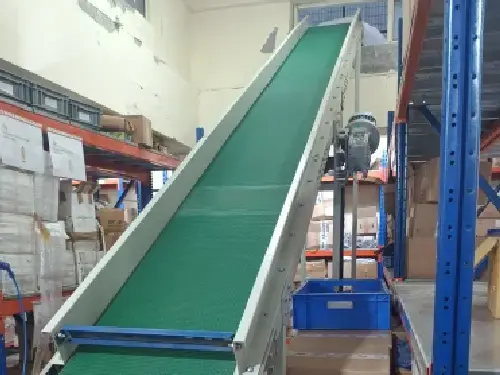
Straight conveyors are suitable for use where you are moving products from a start point to an end point. In smaller production lines, however, it can be necessary to arrange the conveyors inclined, curved, or specially made for the line.
If you have a tight space and material-flow requirement, you need the help of a belt conveyor manufacturer.
4. Take the right type of conveyor machine.
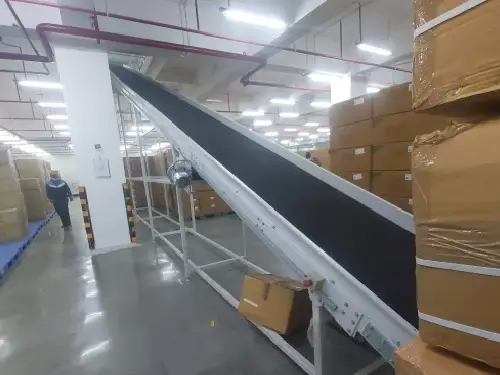
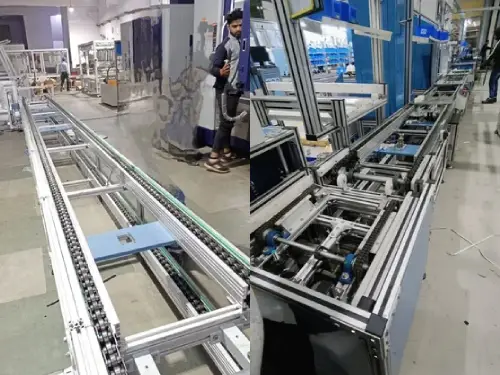
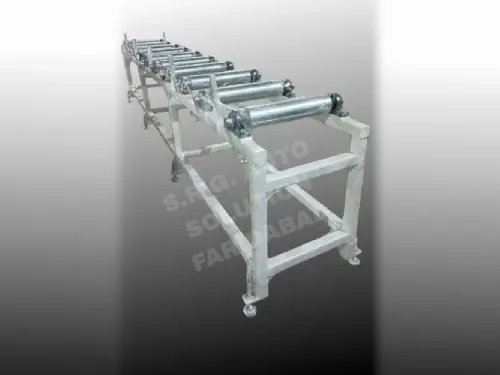
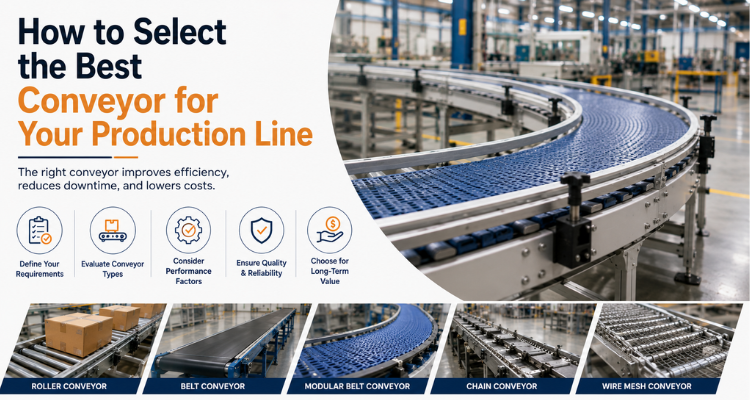
Conveyor systems come in various types, depending on the application. Belt conveyor factory are used extensively due to their ability to deliver the product in a smooth and continuous manner.
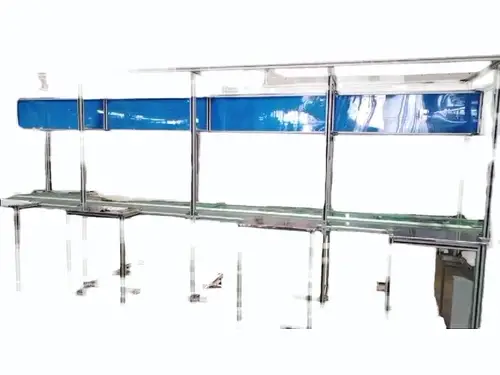
In manufacturing/assembly areas, packaged goods, components, boxes and other goods can be transported effectively and economically in a flat belt conveyor. It is easy to use and can be customized to fit the desired size and capacity.
In cases where durability, ease in cleaning, or flexibility of belt configurations is desired, a modular belt conveyor is also available. The modular belts are made by using interconnected plastic modules and can be used in various industrial environments.
It will differ based on the product, the process to produce the product, operating conditions and desired speed.
5. Check Load Capacity
Do not judge a conveyor by just its size or its appearance. Calculate the maximum amount of load the system can withstand during normal operation.
The frame, belt, rollers, motor and other parts of the conveyor need to be able to deal with the predicted load. Again, it’s a good idea to also take into account some odd peaks versus designing the system around the more “normal” use instance of the average product weight.
Use the right size to minimise over-wearing and long-term usability.
6. Take into consideration the Operating Environment
Conditions in the working environment can affect the performance and durability of a conveyor. Think: will the conveyor be in a dusty, humid, hot, cold, wet or chemically exposed area?
When cleaning or moisture is likely to be a frequent occurrence, appropriate materials and components should be selected for a specific application. Also, high-temperature applications might call for special belts and components.
Talking with an experienced conveyor manufacturer will clarify their operating environment and allow you to determine appropriate material and conveyor selection.
7. LifeCycler takes into account the maintenance requirements.
The actual performance of a conveyor after installation is not only important, but simplicity in maintenance is also important. Predictive maintenance and regular inspections can ensure that components are not worn out and could result in a surprise downtime.
Try to inspect systems with easy access to pivotal parts like belt, bearings, motors and rollers. With this level of ease of maintenance, your service time can be minimized and your production remains efficient.
8. Pay attention to safety features.
Whenever you install a conveyor system, it must always be safe. Safety devices such as emergency stop controls, guards, sensors, protective covers, control systems, and others can be used depending on the application.
The conveyor setup around moving components should also adhere to established clearances and proper safety measures. A well-planned system helps to ensure worker protection and material efficiency.
9. Take into account future production requirements
Your production requirements may change as your business grows. Therefore, think about future expansion, modification or addition of equipment to the conveyor.
Use of a scalable conveyor system allows for scaling up production without the need for a complete redesign of the existing system.
10. Work With the Right Manufacturer….
Along with selecting the right type of conveyor, choosing the right conveyor manufacturer is equally important. An experienced manufacturer understands production requirements and can recommend suitable equipment, customize the system, and provide installation and maintenance support.
When evaluating the price, consider factors such as technical specifications, material quality, customization options, after-sales support, and overall value rather than focusing only on the initial purchase price.
Conclusion
Choosing the right conveyor for your production line depends on several factors, including the type of product you handle, required capacity, operating speed, available space, working conditions, safety requirements, maintenance needs, and future expansion plans. The right system can streamline your workflow, reduce manual handling, and maintain consistent production.
By understanding your material handling requirements and working with an experienced conveyor manufacturer like SRG Autosolution, you can select a system that meets your needs and supports efficient, reliable production for years to come.